That electric zing down your leg isn’t just pain—it’s a nerve begging for movement, like a garden hose kinked at the tap. Everything you’ve been told about stretching might be making it worse. You know that stuck feeling, the one that makes sitting unbearable and standing feel like a punishment. What if the relief you’re chasing isn’t about pulling harder, but gliding smarter? The nerve doesn’t need force—it needs freedom. There’s a gentler, almost counterintuitive way through this, and it starts with movement you’d never expect to help.
What Sciatic Nerve Pain Feels Like
What does sciatic pain actually feel like when it takes over your day? It’s sharp, shooting, electric—like a live wire tucked into your buttock or thigh.
Sometimes it burns deep, sometimes it’s a nagging ache that builds until it demands attention. Your body knows this pain, and you’re not imagining its intensity.
It burns deep. It nags and builds. This pain is real, and your body isn’t lying to you.
You might also notice sensory symptoms riding alongside it: tingling, numbness, that “fallen asleep” heaviness spreading down your leg. These sensations often stem from conditions like herniated discs compressing the nerve.
Coughing, sitting, bending—these small movements can flare everything up. That’s your nervous system, tight and guarded, asking for a different approach.
This is exactly where nerve flossing for back pain steps in. Gentle, rhythmic glides help calm irritated nerves, offering real sciatica relief without force—just steady, compassionate movement towards freedom again. This approach aligns with the principles of fascial release, which supports self-management of stiffness and discomfort.
What Is Nerve Flossing?
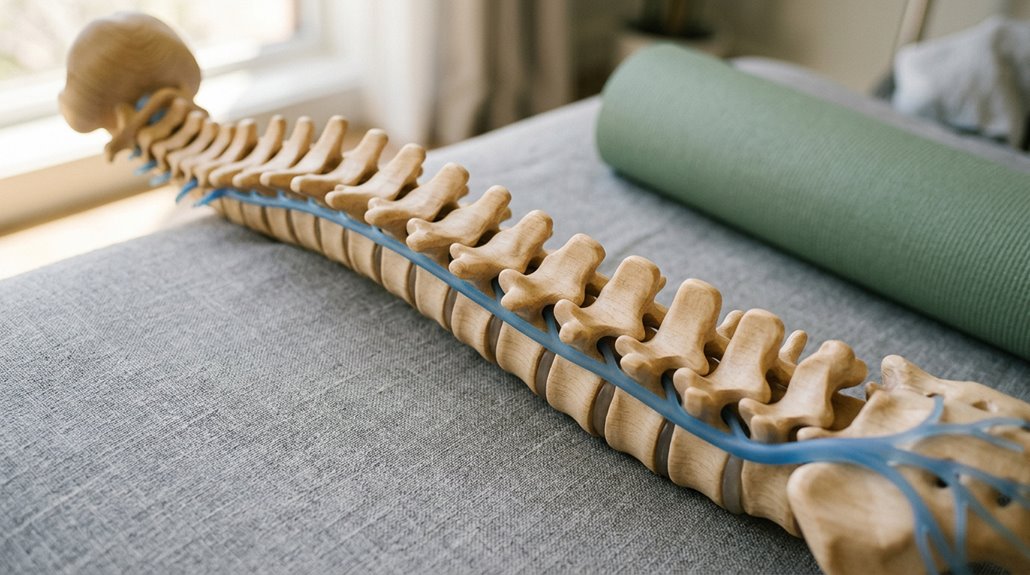
Envision your sciatic nerve like a dried-out shoelace, snagging and sticking every time you shift in your chair.
Nerve flossing gently glides that nerve back and forth through its natural pathway, easing it loose the way you’d work a stuck zip free—no yanking, no force, just patient, rhythmic motion.
It’s your body’s way of unsticking what’s stuck, restoring that slippery, effortless glide so you can move through your day without wincing at every step. Similar to myofascial release, this method focuses on stimulating fluid movement within connective tissues to restore elasticity rather than forcing change. This technique is also referred to as nerve gliding in clinical settings.
Definition and Mechanism
That zing running down your leg, the tightness that makes you dread standing up from your desk—your nerves might just be stuck.
Nerve flossing, also called nerve gliding or neural mobilisation, is a form of gentle movement therapy that coaxes irritated nerves back into motion. Think of your nerve as a delicate cord threaded through a sheath of tissue. When that pathway tightens, every step reminds you. This approach shares common ground with Myofascial Activated Posture techniques, which emphasise the connection between fascia and posture in easing chronic pain.
Nerve glide exercises work by restoring your nerve’s natural glide, easing the friction between it and the tissue surrounding it. You’re not stretching harder or forcing anything. A common example is the “slider” exercise, which lengthens and shortens the nerve to encourage smoother movement through surrounding muscle and connective tissue.
You’re inviting movement back in, gently, safely, so your nervous system remembers what freedom feels like—a real tool for chronic pain management that respects how tender you feel right now.
How It Works
Since your nerve runs through your body like a cord threaded through a narrow sheath, it needs room to slide, not just stretch. That’s the heart of nerve flossing: gentle, alternating movements that create tension on one end while the other softens, letting your nerve glide like silk instead of catching like a snagged zip.
This glide taps into real pain-reduction pathways. Your body’s own calming signals switch on, quietening that hypersensitive alarm system and easing the grip of chronic tension. This approach aligns with the broader goal of a thorough fascial suit assessment, which aims to uncover the true source of discomfort rather than just masking symptoms.
As glide improves, something lovely happens: myofascial-activated posture. Your fascia hydrates, your alignment settles, and you stand taller without forcing it. You’re not stretching harder—you’re finally moving the way you were built to. For best results, these movements should be repeated 3–5 times, allowing the nerve to gradually adapt without being forced into discomfort.
Common Use Cases
When your low back pain shoots down into your leg like a hot wire, nerve flossing steps in as your gentle first responder. Sciatica loves this technique, especially when that fire travels from your spine into your calf.
If a herniated disc is pinching things down there, or piriformis syndrome has your hip locked up tight, nerve flossing eases that pressure like unzipping a too-tight wetsuit. This same gliding motion also works to improve range of motion in the hips, loosening what felt permanently stuck.
You don’t need a dramatic diagnosis to benefit. Pinched nerves, radiating tightness, even that nagging tarsal tunnel ache in your foot—all respond to this soothing glide.
At our physiotherapy Pretoria studio, we pair nerve flossing with real back pain relief strategies, guiding your nervous system back towards calm, mobile, unstuck living. Our approach begins with a comprehensive clinical assessment conducted by a registered physiotherapist, ensuring nerve flossing techniques are tailored safely to your specific condition.
Does nerve flossing really help sciatica?
You already know that shooting, electric pain down your leg, and you’re desperate to know if there’s a real way out.
Here’s the reassuring truth: research backs nerve flossing as more than just hopeful stretching, showing genuine relief for tight, irritated nerves.
Better yet, the benefits ripple beyond pain relief alone, and when you pair this gentle glide with the right therapy, your whole body starts moving like it finally remembered how. Classes that combine clinical physiotherapy with Myofascial Activated Posture take this a step further, helping you break free from chronic pain while restoring natural alignment and ease of movement.
What The Research Shows
Because sciatica can turn every twinge into a full-body panic, it’s fair to wonder if nerve flossing is legit or just another wellness trend.
Here’s the honest, reassuring truth: research leans supportive, even if it’s not a magic cure. When you pair gentle map movement with fascia release, your nervous system gets the message that it’s safe to move again.
Studies show real, tangible progress:
- Pain drops — often the very first sign your body is softening its guard.
- Function improves — bending, reaching, and sitting feel less like struggles.
- Straight leg raise increases — proof your sciatic nerve is gliding, not gripping.
If your pain is severe or you’re recovering from surgery, a private physiotherapy assessment is recommended before starting nerve flossing on your own.
Think of it as consistent, believable relief—not overnight magic, but steady, trustworthy progress your body builds one gentle session at a time.
Benefits Beyond Pain Relief
Once your nerve starts gliding instead of gripping, something bigger than pain relief shows up: your whole body starts moving like it means it.
Your hips loosen. Your stride lengthens. Bending down to tie your shoes stops feeling like a negotiation with your own spine.
This is about reclaiming your day, not just quieting your pain. Sitting through a long meeting, standing at the sink washing up, walking the dog around the block—these small moments start feeling easy again.
That’s disability melting away, one freed nerve at a time.
You’ll notice less tingling, less numbness, less of that electric buzz down your leg.
Your nervous system calms down because it finally trusts movement again. That trust? It’s everything.
If you want to keep that progress going, pairing nerve flossing with https://movewithmartina.co.za/services/online-map-movement-classes/ structured myofascial release workouts can deepen the sense of ease throughout your whole body.
Best Results With Therapy
So does nerve flossing actually work, or is it just another wellness buzzword floating around the internet?
Here’s the honest truth: it shines brightest as a teammate, not a lone hero. Think of it like unzipping a tight wetsuit—your nerve needs that gentle glide, but your whole body needs support too.
Research keeps pointing to one sweet spot:
- Pairing it with physical therapy for structural balance
- Adding strengthening work so your relief actually sticks
- Layering in load management to protect those hard-won gains
Alone, flossing offers a taste of freedom.
Combined with guided care, it becomes your rehab foundation—turning stiff, guarded movement into something that finally feels like yours again. For those seeking a structured approach, private consultations include a full fascial assessment to create a customised recovery plan tailored to your specific needs.
Who Should Avoid Nerve Flossing
While nerve flossing feels like gentle magic for a stuck, achy back, it isn’t the right move for every body on every day. If your pain arrived suddenly, sharp and electric, or if numbness and weakness are spreading, pause. That’s your nervous system waving a red flag, not inviting a stretch.
Fresh from surgery or injury? Give those tissues time to knit before asking them to glide. Same goes for flare-ups, inflammation, or diagnoses like diabetes, rheumatoid arthritis, or CRPS—your body needs a clinician’s eyes first, not a home routine.
Healing tissue needs time, not tension—let a clinician clear the path before you glide.
If you’re unsure whether this technique is safe for your condition, consider booking an Individual Assessment to get personalised guidance before trying it at home.
You deserve relief, but safely. If symptoms worsen afterwards, or balance feels off, stop and check in with a professional.
Freedom comes from timing this right, not rushing it.
How to Floss the Sciatic Nerve Safely
Because your sciatic nerve behaves like a strand of silky floss threading through a needle, this exercise asks for glide, not tug.
Sit tall, chair beneath you, feet grounded. Extend one leg, point your foot away, and let your head drop softly towards your chest—then reverse, flexing your foot as your head lifts. That’s the whole dance.
Here’s your gentle rhythm:
- Move slowly, like honey sliding off a spoon—no bouncing, no forcing.
- Stop the moment you feel sharp pain or tingling; mild tension is your ceiling.
- Start with 10 reps per side, breathing steadily the whole time.
Your nerve wants to slide freely, not stretch to its limit. Trust the glide—your body already knows this rhythm.
Simple Nerve Gliding Exercises to Try at Home
Once your sciatic nerve remembers how to glide, it’s time to build a whole toolkit of movements that keep that silky slide going strong.
Lie on your back and bend one knee towards your chest, then slowly straighten it while flexing and relaxing your ankle, like a gentle wave rolling down your leg. Feel that tension melt into slack, over and over, 5 to 15 times per side.
Sitting works too. Straighten one leg while your torso and neck ease into a coordinated stretch, foot pointing then flexing, 10 to 20 reps whenever your body craves it.
Add a soft prone press-up, lifting your chest while your hips stay grounded, holding just 5 to 10 seconds. Your spine will thank you.
When to Stop and See a Doctor
Your body is clever, and it’s always talking to you—so let’s make sure you’re actually listening.
Nerve flossing should feel like a gentle glide, never a sharp jolt. If sensation shifts from soothing to alarming, that’s your cue to pause and reassess.
Watch closely for these signals:
- New or worsening pain during the glide, especially sharp or shooting sensations down your leg.
- Numbness, tingling, or weakness that lingers well after you’ve stopped moving.
- Bowel, bladder, or saddle-area changes—these need emergency care immediately.
Fever, unexplained weight loss, or pain after a fall also deserve a doctor’s attention.
You’re not overreacting by seeking help—you’re honouring your body’s wisdom.