
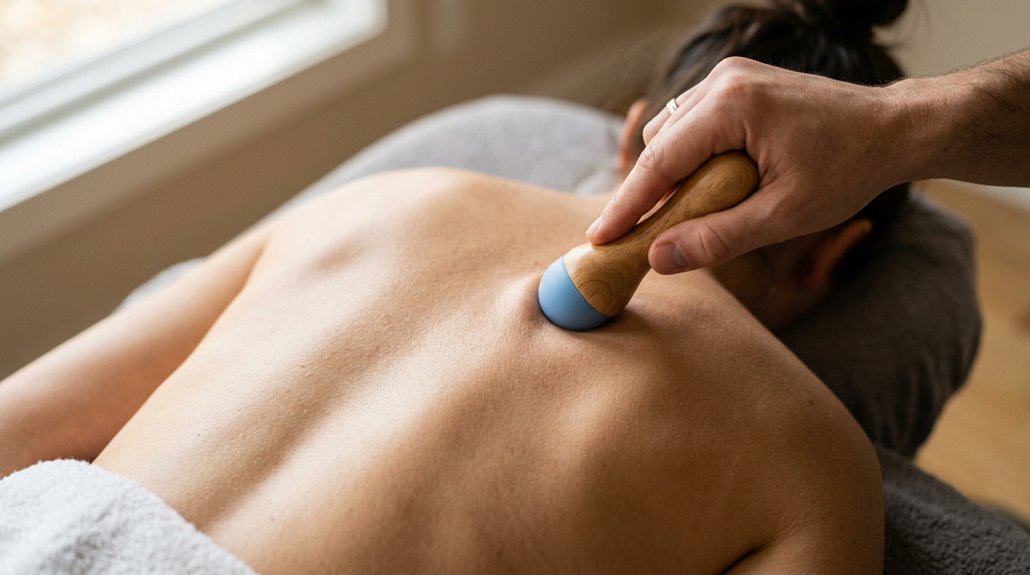
You’ve been attacking that knot under your shoulder blade all wrong. Digging your thumb in, pressing harder, hoping brute force will win—it won’t. Muscle tissue doesn’t surrender to pressure; it fights back, bracing tighter with every jab. The knot you’re battling isn’t broken tissue that needs breaking further. It’s tight muscle waiting for a completely different approach, one that works with your body instead of against it. The technique that actually convinces stubborn knots to release starts so gently you’ll wonder if it’s doing anything at all.
What’s Really Going On With a Back Knot
When you press into that stubborn spot between your shoulder blades, you’re not imagining things—you’re feeling a myofascial trigger point, a tiny patch of muscle that’s decided to stay clenched like a fist that forgot how to open. That tightness isn’t random. It’s your muscle fibres staying contracted, mechanically sensitive, ready to ache the moment you poke them.
Think of fascial knots like a dried-out sponge—stiff, stuck, unable to expand. Poor posture, desk-bound hours, and daily stress all feed this cycle, tightening the band until movement feels smaller than it should. This same fascia-first thinking underlies techniques like Myofascial Activated Posture, which treats the body as an interconnected web rather than isolated muscles.
Real trigger point care starts with comprehending this pattern, not fighting it. Gentle, informed treatment for back knots rehydrates tissue, softens the grip, and invites your body back toward ease—one patient, breath-filled release at a time. A thorough history and neuromuscular exam remain essential, since diagnosis relies on locating and quantifying these band-like nodules through careful physical examination.
Why Digging In Hard Can Backfire on Trigger Points
Because that knot feels so stubborn, it’s tempting to grab a lacrosse ball and grind away as if you’re sanding down a stubborn stain—but that’s exactly the wrong move. Your tissue is already irritated, and hammering it harder just tells your nervous system to guard tighter, not release.
Grinding harder into an angry knot doesn’t release it—it just teaches your nervous system to clench tighter and guard.
That angry knot can bruise, inflame and stay sore far longer than if you’d simply left it alone.
Here’s the truth about real back pain therapy: your body craves communication, not combat. Trigger point balls work beautifully when you use them like a gentle question, not a punishing statement. This matters even more considering that diagnosis of these knots is primarily clinical and lacks objective testing to confirm how much pressure your tissue can actually tolerate.
Think gentle myofascial release—soft, patient pressure that invites fascia to soften like a dry sponge slowly soaking up water. That’s how lasting freedom actually happens. This same principle guides mindful MAP movement, which pairs clinical physiotherapy with patient, deliberate movement to help break the cycle of pain rather than force it away.
Start Light: The Safest Way to Release a Back Knot
Think of that stubborn knot like a dried-out sponge — it needs a gentle, steady soak, not a sudden squeeze that leaves it bruised. This approach mirrors the Myofascial Activated Posture method, which emphasises the connection between fascia and posture for lasting relief.
Start with a light touch, easing around bone and staying on soft, meaty tissue where your fascia can actually respond and rehydrate. Aim for a pressure intensity of 4 to 7 on a scale of ten, easing in gradually rather than pressing hard straight away.
If anything sharpens instead of softening, that’s your cue to back off immediately; relief should feel like a slow unzip, never a jolt.
Begin With Light Pressure
That knot between your shoulder blades doesn’t need a wrestling match—it needs an invitation. Effective trigger point care always starts with gentle pressure, soft enough to feel like a question rather than a demand.
Think of your fascia as a dried sponge: squeeze too hard, too fast, and it resists. Ease into it, and the tissue drinks in the release.
This is the heart of safe self-massage. Let your fingers or tool simply rest on the tender spot, feeling for that subtle tenderness without digging in. A trained provider will typically begin with an initial assessment to locate these trigger points before applying any technique.
You’re not chasing pain—you’re locating it, gently, so your body trusts you enough to soften. For persistent knots, a professional clinical evaluation of movement patterns can uncover deeper causes of tension that self-massage alone may miss. That trust is what releases real relief, one patient breath at a time, no bruising required.
Avoid bony areas
Once you’ve found that gentle, listening pressure, it’s time to get smart about where you place it. Your spine and shoulder blades are landmarks, not targets—think of them as street signs guiding you toward the good stuff, not the destination itself. The real relief lives in the soft, muscular groove beside your spine, where your massage ball techniques can actually sink in and hydrate tired fascia like a dried sponge soaking up water. If you’re ever unsure whether you’re pressing in the right spot, registered physiotherapists can offer personalised adjustments to keep your technique safe and effective.
| Press Here | Skip This |
|---|---|
| Muscle beside the spine | Spinous processes |
| Fleshy shoulder area | Scapular tip |
| Thoracolumbar muscle | Rib margins |
| Soft lower back tissue | Pelvic bone edges |
Pair this awareness with your map movement exercises, and if pain lingers, a quick search for “physiotherapy near me” keeps your body safely on track. These trigger points often develop from poor posture during daily activities, so staying mindful of how you sit and stand can prevent knots from forming in the first place.
Stop if pain increases
Since your body talks to you the whole time you’re working on a knot, your job is simply to listen.
If that mild discomfort suddenly turns sharp, burning, or electric, that’s not progress—that’s your tissue waving a red flag. More pressure isn’t bravery; it’s a mistake that leaves you bruised instead of blissful.
The moment pain climbs instead of easing, stop pressing. Let the muscle breathe and settle for a full minute, like a dried sponge finally allowed to soften before it drinks in more water.
Then return with a gentler touch, or simply shift to a new spot.
Real release feels like unzipping a tight wetsuit, not tearing one.
For lasting results, a comprehensive clinical assessment conducted by a registered physiotherapist can identify the root cause of the tension rather than just chasing the symptoms.
If the ache lingers or worsens later, a physiotherapy Pretoria session can help you move forward safely.
Never press directly on the spine or bone
Your spine is bone, not a knot, and it deserves a wide berth from your massage ball. Those hard, stacked vertebrae aren’t soft tissue waiting to release—they’re your structural support system, and pressing directly on them brings pain, not relief.
Instead, guide your tool just beside the bone, into the muscle that hugs your spine like a supportive friend.
That soft valley next to your spine? That’s where the magic happens.
Same rule applies to the edges of your shoulder blades, hip bones, elbows and knees—anywhere bone meets the surface, ease off. If you land on something hard and achy instead of a tender, marble-like knot, you’ve drifted too far.
Shift over, breathe, and let the muscle belly do the work. If you’re unsure whether you’re applying pressure correctly, a professional comprehensive assessment of body history can help identify exactly where your trigger points lie and how to safely address them.
Pair Heat and Gentle Movement With Trigger Point Massage
That stubborn knot between your shoulder blades isn’t just asking for pressure—it’s asking for warmth first, like a dried-out sponge that needs soaking before it can soften.
Once heat sinks in and your muscles stop guarding, gentle movement becomes your best warm-up act, priming tissue so massage feels like relief instead of a wrestling match. If you want expert guidance on pairing movement with release work, structured myofascial release workouts led by registered physiotherapists can show you safe, low-intensity techniques from home.
Think of it as a simple rhythm: heat, move, then press—your knot will thank you for the gentler approach.
Warm Up Before Massage
Two minutes of warmth can turn a stubborn back knot from a clenched fist into an open hand. Before you ever touch a knot, let heat soften the ground you’re working on. A warm shower or a wrapped heat pack—never longer than 15 minutes, never on bare or numb skin—coaxes tight fibres into softening like a dried sponge finally meeting water.
Once you’re warm, wake the area gently. Pelvic tilts, knees-to-chest, and slow knee rolls, repeated up to ten times, ease guarding without forcing anything. Think comfort, not conquest. This isn’t about digging in hard; it’s about inviting your tissue to trust you.
If pain feels sharp or worsening, skip heat and check in with a professional instead. A private consultation can offer a full fascial assessment and a customised recovery plan tailored to your body’s specific needs.
Combine Massage With Stretching
Once your muscle knot feels warm and willing, don’t stop there—pressure alone is only half the story. After you release that tender spot with firm, patient pressure—thirty to ninety seconds, breathing through it—your tissue is primed like a sponge ready to soak up space.
That’s your cue to stretch, gently coaxing the muscle back into its full, easy length. Think of it like unzipping a tight wetsuit: massage loosens the seal, stretching lets you finally breathe inside your own skin. Ease into the movement slowly, stopping well before sharp pain.
This pairing—pressure, then release—matters most for stubborn low-back and glute knots. Classes built around Myofascial Activated Posture show how blending clinical technique with mindful stretching restores natural alignment over time.
Finish with light movement to lock in that looseness. Your body remembers freedom; you’re simply reminding it.
Move Often, Stay Comfortable
Warm up before you dig in, and that tight, guarded muscle will meet you halfway.
Think of your fascia like a dried-out sponge—fifteen minutes of moist heat and it starts soaking up ease again, softening its grip before you ever touch the knot.
Skip this step, and you’re negotiating with a muscle that hasn’t agreed to cooperate yet.
Once you’re warm, keep moving. Stillness lets tension re-lock; motion keeps your body fluid and willing.
- Walk for a few easy minutes to wake up circulation.
- Swim or cycle for low-strain range of motion.
- Pair short movement breaks with your heat sessions.
- Pace yourself—little and often beats one big push.
Sharp or radiating pain? Stop, and check in with a professional.
How Massage and Physical Therapy Treat Back Knots
Imagine your back knot as a tiny fist, clenched tight from days of hunching over your desk. Massage coaxes that fist to unclench, using gentle pressure until the tissue softens beneath your fingers like a dried sponge finally soaking in water. Physiotherapy takes it further, teaching your whole body to stop making fists in the first place.
| Approach | What It Feels Like |
|---|---|
| Trigger Point Pressure | A steady, melting release |
| Myofascial Release | Fascia unzipping, freeing movement |
| Stretching & Strengthening | Muscles waking up, balanced |
| Posture Retraining | Your spine remembering ease |
| Combined Care | Lasting freedom, not just relief |
You deserve both: the immediate hush of tension leaving, and the deeper rewiring that keeps your back feeling open, light, and truly yours again.
When a Back Knot Needs a Professional’s Care
Because that tight fist in your back sometimes hides something bigger than tension, you deserve to know when it’s time to call in extra support.
Your body whispers before it shouts, and honouring those whispers is an act of self-love, not failure. If you notice any of these signals, it’s your cue to seek a professional’s steady hands and expert eyes.
- Pain that shoots below your knee, tingles, or numbs your skin like static.
- A knot paired with fever, redness, swelling, or warmth that feels hot to the touch.
- New bowel, bladder, or urinary changes appearing alongside your back pain.
- Pain following a fall, ageing past fifty, or nights stolen by sleeplessness.
Trust your body’s story—professional care is your next brave, loving step forward.